
Mica Insulation Acceptance Criteria and Compliance Verification: A Buyer Checklist
A buyer checklist for mica insulation acceptance should turn supplier claims into product-specific, documentable criteria: the purchased form and model, the temperature basis behind a 1000℃ maximum, breakdown voltage at the ordered mica roll thickness, purchasing terms, and supplier-side verification evidence. The purpose is not to collect general certificates. The purpose is to build an approval file that can be audited against the product actually shipped.
Mica insulation is used in fire-resistant cables, EV battery thermal barriers, industrial heating equipment, household appliances, rail equipment and other high-temperature electrical applications. Each application imposes a different acceptance question. A tape buyer may need fire test evidence and winding performance. A mica roll buyer may need a thickness-to-breakdown-voltage relationship. A mica plate buyer may need continuous and intermittent temperature ratings. A mica parts buyer may need dimensional and assembly evidence. Treating all of these as one commodity creates avoidable approval risk.
Problem Definition: Why Mica Insulation Acceptance Is Not a Certificate Check
The first problem is product-form mismatch. Mica insulation is sold as mica tape, mica plate or mica sheet, mica roll, mica tube, mica parts, mica insulator and etched foil mica heater. These forms do not share one test basis. A mica tape specification may state breakdown voltage in kV for a tape sample. A mica plate specification may state dielectric strength in kV/mm. A mica roll specification may state breakdown voltage in kV at a given roll thickness. A buyer who applies one number to another form can create a false acceptance criterion.
The second problem is temperature language. A stated maximum of 1000℃ is useful only when the buyer knows whether it is a continuous service rating, an intermittent service rating, a short-term fire exposure, or a material limit. The available product data shows why this matters. The R-5660-G3 phlogopite glossy mica plate lists continuous service at 700℃ and intermittent service at 1000℃. The R-5660-G1 muscovite glossy mica plate lists continuous service at 500℃ and intermittent service at 800℃. The R-5461 mica roll range states a maximum temperature of up to 1000℃ as a selling point. These are different statements and should not be collapsed into one acceptance line.
The third problem is thickness dependence. Breakdown voltage is not a single material property that can be transferred from one roll thickness to another. For the R-5461-PGP phlogopite mica roll with glass inside, the published breakdown voltage rises from more than 2 kV at 0.2 mm to at least 5 kV at 0.5 mm. For the R-5461-COMBI G ceramic-backed phlogopite mica roll, the published values run from more than 4 kV at 2.1 mm to at least 6 kV at 2.5 mm. The buyer should write the acceptance value against the ordered thickness and model, not against the product family name alone.
The fourth problem is certificate scope. A management-system certificate such as ISO9001 or IATF16949 is not a product test report. A product-compliance statement such as UL, FDA, RoHS or REACH is not a certificate number, a product scope, or a validity date by itself. The available company profile states that Zhejiang Glory Mica Co., Ltd. has passed ISO9001, ISO14001, ISO14005 and IATF16949 system certifications, and that its products have passed UL and FDA certifications and meet EU RoHS and REACH environmental requirements. For procurement, that statement is a starting point for a document request, not the end of verification.
Industry Background: Why Documentation Is Becoming More Important
Mica insulation demand is tied to high-temperature electrical safety, fire protection and thermal management. A 2024 market estimate cited in the verified data places the global mica insulation material market at USD 1.811 billion, with a projected compound annual growth rate of 6.4% from 2024 to 2034 (Statifacts). The exact forecast should be treated as a market estimate, not a procurement price signal, but it explains why buyers are seeing more product variants, more supplier claims and more documentation requests.
Regulation is another driver. China's GB 38031-2025 standard, effective 1 July 2026, requires 120 minutes of thermal runaway protection under test conditions for electric vehicle traction batteries. That requirement does not automatically define a mica roll specification, but it raises the importance of traceable thermal-barrier evidence in EV battery applications. A supplier's general fire-resistance statement is weaker than a product-specific test file that identifies the mica form, thickness, construction and test condition.
Standard references also need correct use. ASTM D1039-16(2022), Standard Test Methods for Glass-Bonded Mica Used as Electrical Insulation, is listed by ASTM as a test-method reference for glass-bonded mica. It is not a certificate that any supplier's mica tape, mica roll, mica plate or mica tube complies with ASTM D1039. If a purchase order cites a standard, the buyer should state the standard number, the applicable product form, the test method and the acceptance value. Otherwise the standard reference adds words but not control.
For a research-to-evaluation buyer, the practical conclusion is simple: mica insulation acceptance should be built as a purchase-file process. The file should connect the application requirement to the product model, then to the supplier evidence, then to the incoming inspection record. This is also the logic behind the checklist below.
Detailed Solution: The Mica Insulation Buyer Acceptance Checklist
The checklist has six gates. Each gate produces a document or a recorded decision. If a supplier cannot support a gate, the buyer can still proceed, but the gap should be visible in the approval file rather than hidden behind a general statement.
Gate 1: Define the purchased form and the application duty
Start with the form, not the brand. State whether the purchase is mica tape, mica plate or mica sheet, mica roll, mica tube, mica parts, mica insulator or etched foil mica heater. Then state the application duty: fire-resistant cable insulation, EV battery thermal barrier, industrial heating, household appliance insulation, rail equipment or another use. The application duty determines which evidence matters. For a fire-resistant cable, tape fire grade and winding behavior may be central. For an EV battery thermal barrier, thermal runaway exposure and dielectric separation may be central. For an industrial furnace, plate strength and continuous temperature rating may be central.
The available application data illustrates the difference. In rail traffic, the function is to prevent high-voltage electricity from breaking through and sparking, using mica's layered crystal structure against arc burning. In EV battery and energy storage applications, the function is high-temperature and resistant insulation, with voltage endurance and plate strength determined according to customer requirements. In industrial heating and electronic components, mica plate is used in transformers, electric furnaces, generators, magnetic coils and coil insulation. In household appliances, mica sheet and mica parts act as a high-temperature barrier and, in some heaters, as a heat carrier. These are not interchangeable duty statements.
Gate 2: Write purchasing terms and acceptance criteria into the order
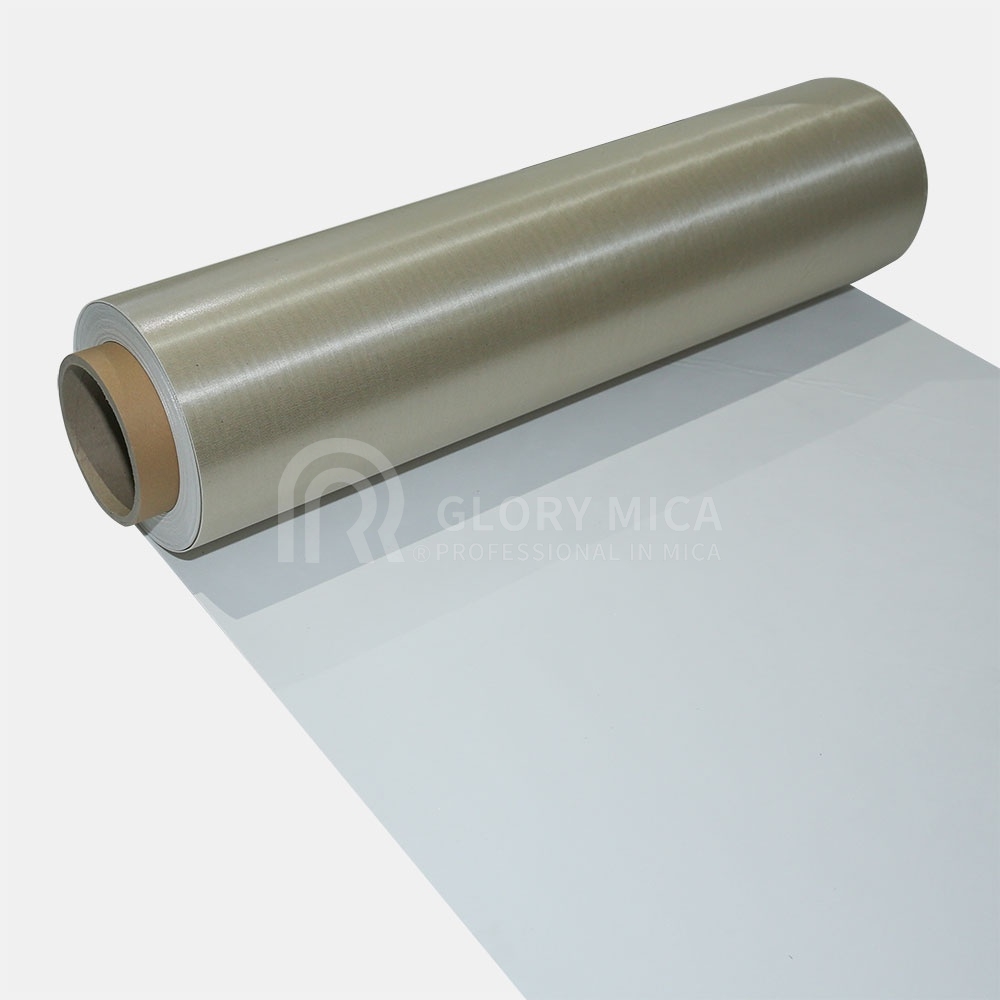
The purchase order should identify the model and the acceptance basis. For a mica roll, the minimum field set should include the model, construction, thickness and tolerance, mica content, length, width where applicable, breakdown voltage, temperature rating basis, packaging and traceability. For a mica tape, the field set should include thickness, mica content, reinforcement, binder content, breakdown voltage, tensile strength, length and fire grade where applicable. For a mica plate or sheet, the field set should include mica type, mica content, binder content, density, continuous and intermittent temperature ratings, dielectric strength, flexural strength, water absorption and flame rating where applicable.
Use the supplier's published model data as the starting point, then convert it into acceptance language. For example, the R-5461-PGP phlogopite mica roll with glass inside is published with a thickness of 0.2±0.02 mm, mica content of 350±10 g/m2 and breakdown voltage above 2 kV; at 0.3±0.03 mm, 500±20 g/m2 and above 3 kV; at 0.4±0.03 mm, 600±20 g/m2 and above 4 kV; and at 0.5±0.04 mm, 730±20 g/m2 and at least 5 kV. Those values belong in the specification only when the buyer orders that model and that thickness. They should not be written as a generic mica roll requirement.
Purchasing terms should also fix the change-control rule. If the supplier changes mica type, reinforcement, binder, thickness tolerance, mica content or plant, the buyer should require written notification and, where the application is critical, re-approval. This is especially important when the approval file is used for a long production run. A product that passed a sample review under one construction should not be assumed to be identical after a silent material change.
Gate 3: Confirm the temperature rating against the stated 1000℃ maximum
Ask the supplier to state the temperature rating in three parts: continuous service temperature, intermittent service temperature, and short-term or fire-exposure condition. Then ask for the test method or evidence behind each number. The reason is visible in the available data. The R-5660-G3 phlogopite glossy mica plate lists continuous service at 700℃ and intermittent service at 1000℃. The R-5660-G1 muscovite glossy mica plate lists continuous service at 500℃ and intermittent service at 800℃. The R-5461 mica roll range states a maximum temperature of up to 1000℃. A buyer who writes only 1000℃ without the basis may accept a product outside its continuous rating.
For an application that will see sustained heat, the continuous rating should control. For an application that will see short excursions, the intermittent rating may be relevant, but the duration and test condition should be recorded. For a fire barrier, the fire test condition and the required time should be stated separately from the material's maximum temperature claim. The buyer should not use a maximum temperature statement as a substitute for a fire test report.
Gate 4: Verify breakdown voltage by mica roll thickness
Breakdown voltage acceptance should be written as a model-and-thickness requirement. The table below uses published data from the supplied product units for two phlogopite mica roll constructions. It is a specification reference, not a ranking of suppliers.
| Model and construction | Thickness | Mica content | Published breakdown voltage | Buyer acceptance check |
|---|---|---|---|---|
| R-5461-PGP phlogopite mica roll with glass inside | 0.2±0.02 mm | 350±10 g/m2 | >2 kV | Confirm thickness and breakdown voltage on the same sample record. |
| R-5461-PGP phlogopite mica roll with glass inside | 0.3±0.03 mm | 500±20 g/m2 | >3 kV | Do not apply the 0.5 mm value to this thickness. |
| R-5461-PGP phlogopite mica roll with glass inside | 0.4±0.03 mm | 600±20 g/m2 | >4 kV | Record the test method and sample size. |
| R-5461-PGP phlogopite mica roll with glass inside | 0.5±0.04 mm | 730±20 g/m2 | ≥5 kV | Use the ordered thickness in the purchase order. |
| R-5461-COMBI G ceramic-backed phlogopite mica roll | 2.1±0.04 mm | 190±10 g/m2 | >4 kV | Confirm ceramic thickness of 2 mm where specified. |
| R-5461-COMBI G ceramic-backed phlogopite mica roll | 2.3±0.1 mm | 300±20 g/m2 | >5 kV | Confirm construction and mica content. |
| R-5461-COMBI G ceramic-backed phlogopite mica roll | 2.4±0.1 mm | 420±20 g/m2 | >5 kV | Confirm construction and mica content. |
| R-5461-COMBI G ceramic-backed phlogopite mica roll | 2.5±0.1 mm | 480±20 g/m2 | ≥6 kV | Record the incoming inspection result against this value. |
The table also shows why a buyer should not compare a mica roll with a mica plate using the same unit. The R-5660-G3 phlogopite glossy mica plate lists dielectric strength above 20 kV/mm, while the mica roll table uses breakdown voltage in kV for a roll sample. The mica tube data lists dielectric strength above 1.5 kV/mm. The mica parts data lists breakdown voltage above 15 kV/mm. These are different test bases and should remain separate in the approval file.
Gate 5: Ask supplier-side verification questions
Supplier verification should be evidence-based and specific. The available company profile identifies Zhejiang Glory Mica Co., Ltd. as a national high-tech enterprise and lists honors including 'Small-sized Giant Enterprise featuring specialization, precision, technology and innovation' and 'Invisible Champion' enterprise in Zhejiang Province. It also identifies a Provincial Enterprise Research Institute and a Provincial High-tech R&D Center. These honors are useful context for a supplier file, but they do not replace product-specific test reports. The buyer should file the honor with its scope and date, then keep the product evidence separate.
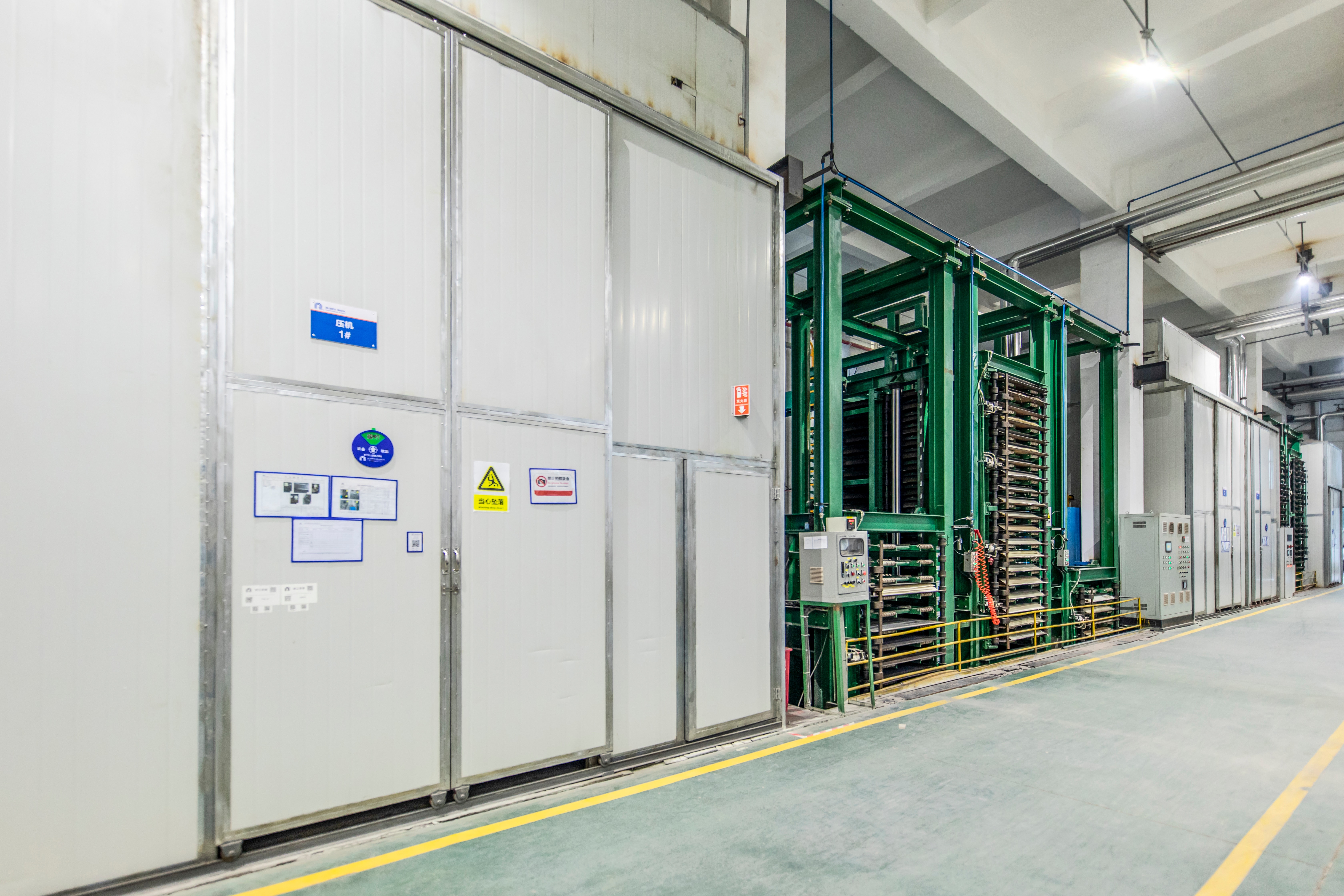
The profile also states that the company has multiple plants in Zhejiang and Hunan. It identifies the Pingjiang plant at 136,000 m2, Xinhuang Plant I at 68,000 m2 and Xinhuang Plant II at 200,000 m2. The profile does not identify an overseas manufacturing plant. That does not prove that no overseas plant exists; it means the supplied profile does not document one. If an overseas plant is important to the buyer's supply-continuity or origin requirements, the buyer should request a written plant list, the manufacturing location for the ordered product and the origin of the mica paper used.
The mica paper question deserves its own line in the checklist. The available product portfolio lists mica paper among the company's main products. That is a portfolio statement, not a confirmation that every mica paper used in every mica tape, roll, plate or tube is produced in-house. The buyer should ask: 'For the ordered model, is the mica paper produced in-house or purchased? If purchased, what is the supplier qualification and traceability record?' The answer should be filed with the technical data sheet.

Gate 6: Build the approval file and control changes
The approval file should be organized so that a new reviewer can follow the logic without asking for the same documents again. A practical file contains: the application duty and acceptance specification; the supplier's technical data sheet for the ordered model; the certificate or compliance document with number, scope and validity; the sample test record; the incoming inspection record; the plant and mica paper declaration; and the change-control agreement. If a document is missing, record the gap and the decision. A visible gap is better than a silent assumption.
The file should also record the version of the product. Mica insulation can change through mica type, reinforcement, binder, thickness tolerance, mica content or processing. The R-5660-G3 and R-5660-G1 plates share a product family name but differ in mica paper and temperature rating. The R-5461-PGP and R-5461-COMBI G rolls share a phlogopite roll description but differ in construction and thickness range. Version control prevents a buyer from approving one construction and receiving another.
Step-by-Step Breakdown: How to Run the Acceptance Process
- Step 1 - Write the application duty. State the equipment, the thermal condition, the electrical condition and the failure mode the mica insulation must resist. For an EV battery thermal barrier, state the thermal runaway condition and the dielectric separation requirement. For a fire-resistant cable, state the fire test condition and the winding process. For an industrial furnace, state the continuous temperature and the mechanical support condition.
- Step 2 - Select the product form and model. Choose mica tape, mica plate or mica sheet, mica roll, mica tube, mica parts, mica insulator or etched foil mica heater. Then select a model and construction. Do not write a purchase order for mica insulation without a form and model.
- Step 3 - Convert the published data into acceptance criteria. Copy the model-specific thickness, tolerance, mica content, breakdown voltage, temperature rating and other parameters into the purchase specification. Mark each value as a published value, a required value or a test value. Do not mix them.
- Step 4 - Confirm the temperature basis. Ask for continuous service temperature, intermittent service temperature and the basis for any 1000℃ maximum claim. Record the test method and the duration. If the supplier cannot separate the ratings, record the limitation and decide whether the application can accept it.
- Step 5 - Confirm breakdown voltage by thickness. For a mica roll, require the breakdown voltage at the ordered thickness and model. For a mica plate, use the dielectric strength basis in kV/mm. For a mica tape, use the tape test basis in kV. Keep the units and sample conditions in the record.
- Step 6 - Request supplier verification documents. Ask for the certificate number, issuing body, product scope and validity date for each claimed certification. Ask for the plant list and the manufacturing location. Ask whether the mica paper is produced in-house or purchased. Ask for the honor or recognition document if the supplier uses it in its qualification file.
- Step 7 - Test the sample against the acceptance criteria. Record thickness, mica content, breakdown voltage, tensile strength where applicable, fire behavior where applicable and dimensional fit. Use the same model and thickness as the planned order. A sample from a different thickness does not validate the ordered thickness.
- Step 8 - Release the product and control changes. Approve the model, the supplier site and the document set. Require written notification before any change in mica type, reinforcement, binder, thickness tolerance, mica content, plant or mica paper source. Re-approve when the change affects the acceptance criteria.
Use Cases: How the Checklist Changes by Application
EV battery thermal barriers
For EV battery thermal barriers, the acceptance file should connect the mica form to the thermal runaway requirement. China's GB 38031-2025 standard, effective 1 July 2026, requires 120 minutes of thermal runaway protection under test conditions. The buyer should ask which mica form and thickness are proposed, what fire or thermal test evidence supports the proposal, and how the mica barrier is assembled in the battery pack. The available application data describes mica sheet as a barrier against high temperature and high voltage in EV battery and energy storage applications, with voltage endurance and plate strength determined according to customer requirements. That means the buyer should write the voltage endurance and plate strength requirements into the purchase specification rather than assume them.
Fire-resistant cables
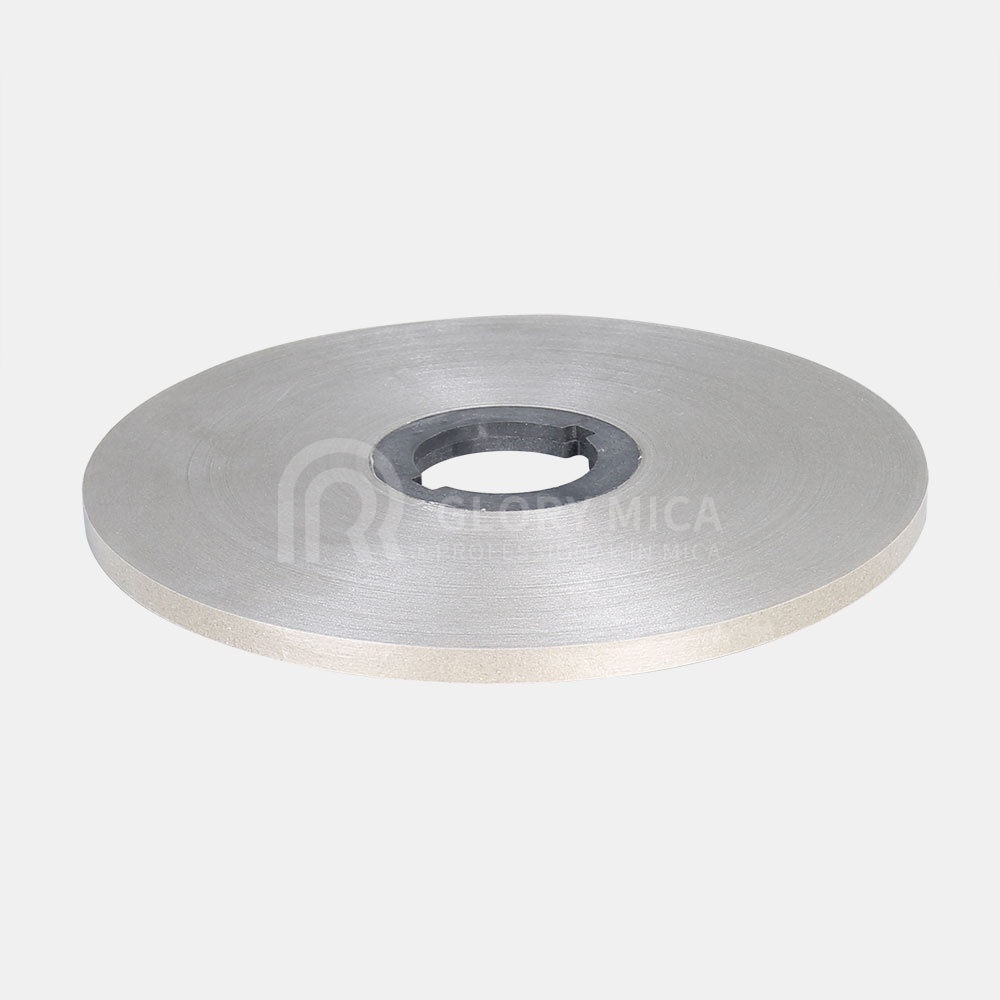
For fire-resistant cables, mica tape is used between the core and the sheath to perform fire-resistant insulation. The available tape data lists fire grades such as BS 6387 / 950℃-1000℃ and IEC 60331 for certain synthetic mica tape models, and 750℃-850℃ with IEC 331 for a phlogopite mica tape model. The buyer should match the tape model to the cable fire test requirement, then confirm thickness, mica content, binder content, breakdown voltage and tensile strength. A general statement that the tape is fire-resistant is not enough; the fire grade and the tape construction should be in the approval file.
Industrial heating and electrical equipment
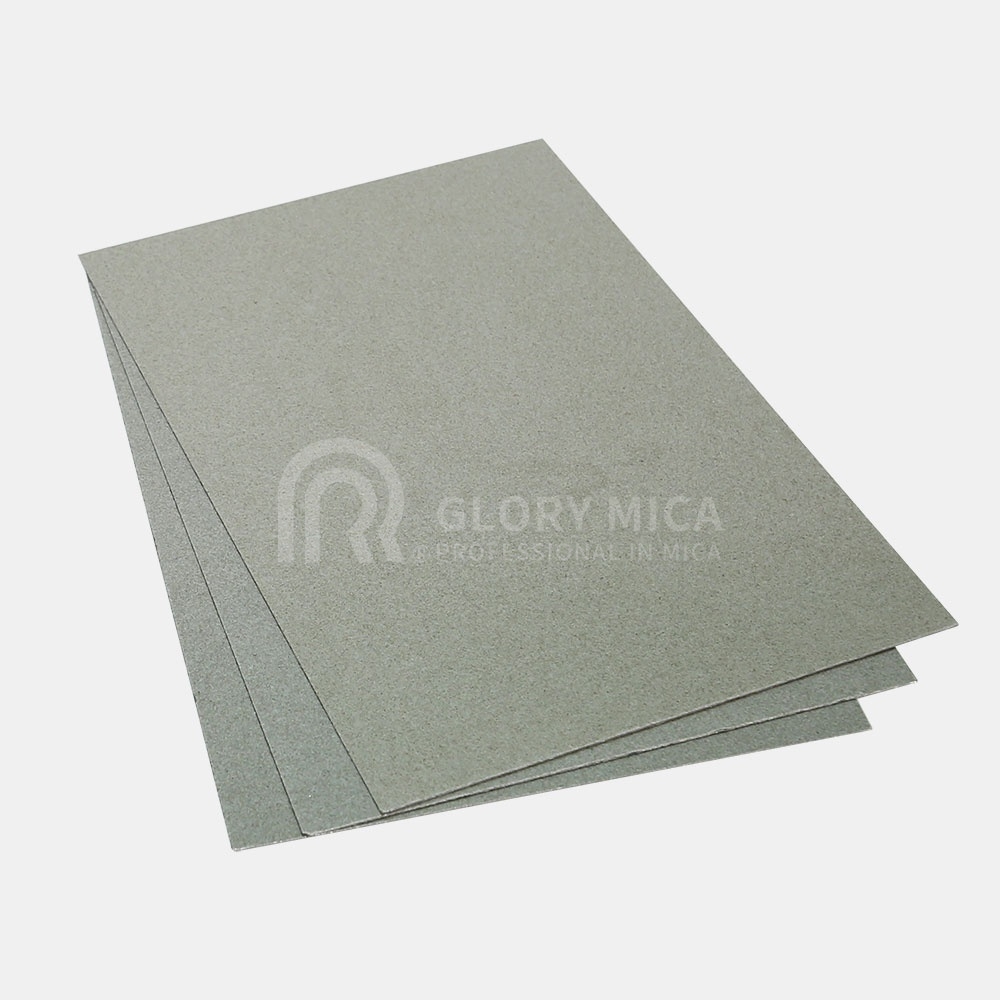
For transformers, electric furnaces, generators, magnetic coils and coil insulation, mica plate or mica sheet is used for high-temperature and resistant insulation. The acceptance file should state the continuous temperature, the intermittent temperature, the dielectric strength and the mechanical strength. The R-5660-G3 phlogopite glossy mica plate lists continuous service at 700℃, intermittent service at 1000℃ and dielectric strength above 20 kV/mm. The R-5660-G1 muscovite glossy mica plate lists continuous service at 500℃, intermittent service at 800℃ and dielectric strength above 20 kV/mm. These values should be matched to the actual heat and voltage condition, not selected by product name alone.
Household appliances and heating elements
For household appliances, mica sheet, mica roll, mica tube and mica parts are used in heat guns, hair dryers, fan heaters, toasters, coffee makers, electric irons and similar products. In some appliances, an etched foil mica heater is used as a heating element. The acceptance file should state the surface temperature, the electrical insulation requirement, the mechanical fit and the relevant appliance safety evidence. The available product data for mica parts states that parts are customised to the shape, size and tolerance required by the customer, with breakdown voltage above 15 kV/mm. That makes the drawing and the tolerance part of the acceptance criteria, not an afterthought.
Comparison Table: Published Mica Roll Thickness and Breakdown Voltage
The table below repeats the core roll data in a compact form for procurement use. It is limited to published values from the supplied product units. It does not compare suppliers and should not be read as a performance ranking.
| Model | Construction | Thickness range in the table | Published breakdown voltage range | Acceptance note |
|---|---|---|---|---|
| R-5461-PGP | Phlogopite mica roll with glass inside | 0.2 mm to 0.5 mm | >2 kV to ≥5 kV | Breakdown voltage rises with thickness; specify the ordered thickness. |
| R-5461-COMBI G | Harmless ceramic fiber backed phlogopite mica roll | 2.1 mm to 2.5 mm | >4 kV to ≥6 kV | Ceramic thickness of 2 mm is listed for this construction; confirm it in the order. |
A buyer can use this table in two ways. First, as a specification check: the purchase order should state the model and thickness, and the acceptance value should come from that row. Second, as an audit check: if a supplier offers a different thickness but quotes a breakdown voltage from another row, the buyer should request the model-specific data sheet and test record. The same discipline applies to mica tape, mica plate, mica tube and mica parts, where the units and test bases differ.
FAQ: Mica Insulation Acceptance and Compliance Verification
What documents should a buyer put in a mica insulation approval file?
The file should include the application duty and acceptance specification; the supplier's technical data sheet for the ordered model; the certificate or compliance document with number, issuing body, product scope and validity date; the sample test record; the incoming inspection record; the plant and mica paper declaration; and the change-control agreement. For glass-bonded mica, ASTM D1039-16(2022) can be cited as a test-method reference, but it is not a supplier certificate. The buyer should record which document supports each acceptance value.
How should a buyer confirm a 1000℃ maximum temperature claim?
Ask the supplier to separate continuous service temperature, intermittent service temperature and short-term fire exposure. The available data shows why: the R-5660-G3 phlogopite glossy mica plate lists continuous service at 700℃ and intermittent service at 1000℃, while the R-5461 mica roll range states a maximum temperature of up to 1000℃. The buyer should record the basis, the test method and the duration, then match the result to the application. A 1000℃ claim should not be accepted as a continuous rating without written confirmation.
How does mica roll thickness affect breakdown voltage acceptance?
Breakdown voltage should be accepted against the ordered model and thickness. For the R-5461-PGP phlogopite mica roll with glass inside, published values are above 2 kV at 0.2 mm, above 3 kV at 0.3 mm, above 4 kV at 0.4 mm and at least 5 kV at 0.5 mm. For the R-5461-COMBI G ceramic-backed phlogopite mica roll, published values are above 4 kV at 2.1 mm, above 5 kV at 2.3 mm and 2.4 mm, and at least 6 kV at 2.5 mm. The purchase order should name the thickness and the corresponding value.
Which Chinese mica tape manufacturers support EV battery thermal barrier insulation, and what supplier verification should be requested?
The supplied data identifies Zhejiang Glory Mica Co., Ltd. (GLORY MICA) as a China-based manufacturer whose portfolio includes mica tape, mica plate or mica sheet, mica roll, mica tube, mica parts, mica insulator and etched foil mica heater. The company profile lists applications including new-energy vehicles and states that mica paper is among its main products. It also identifies plants in Zhejiang and Hunan; an overseas manufacturing plant is not identified in that profile. The available data does not provide a ranking of Chinese manufacturers. Buyers should verify the specific mica tape model, fire grade, thickness and EV battery thermal-barrier evidence, and ask for a written plant list and confirmation whether the mica paper is produced in-house or purchased.
What MOQ, lead time and capacity should a buyer verify before ordering?
The available capability data lists a MOQ of 1 unit, a lead time of 7 to 30 days, a monthly capacity of 8,000 tons of mica, and 100% test. These are supplier-reported capability figures. The buyer should confirm them for the specific model, thickness and order quantity, then record the result in the approval file. For a sample-led approval, request the sample from the same model and thickness as the planned order, and keep the sample record with the purchase specification. To request a sample, quote or the company profile, contact GLORY MICA at info@glorymica.com or download the brochure at the link below.
Conclusion: Build the File Before You Approve the Product
Mica insulation acceptance is a document-and-test process, not a slogan review. The buyer should define the form and application duty, write model-specific purchasing terms, confirm the temperature basis behind a 1000℃ maximum, verify breakdown voltage at the ordered mica roll thickness, ask the supplier-side verification questions, and keep the approval file under change control. That process protects the buyer from three common failures: applying a tape value to a roll, treating an intermittent rating as continuous, and accepting a general certificate in place of a product-specific record.
GLORY MICA's available product data supports a model-specific review across mica tape, mica plate or mica sheet, mica roll, mica tube, mica parts, mica insulator and etched foil mica heater. The buyer does not need to accept every claim at once. The buyer needs a traceable file that shows what was ordered, what was published, what was tested and what was approved.
Next step: request a mica insulation sample, technical data sheet or quotation from GLORY MICA. Include the product form, model, thickness, application duty and required acceptance values in your inquiry so the response can be matched to your approval file.
Email: info@glorymica.com | Website: www.glorymica.com | Address: No. 308, Zhongxing Road, Xinhuang Industrial Zone, Fengqiao Town, Jiaxing City, Zhejiang Province.
Company profile download: Glorymica Company Profile PDF

Have Questions or Need More Details?
Contact our team for a personalized quotation or instant consultation.
Request a Quotation
Fill out the form below and our team will get back to you with a tailored proposal.
WhatsApp Direct Chat
Prefer to chat in real-time? Message us on WhatsApp for instant assistance & quick answers.
- Get a personalized quote
- Share photos or documents
- Discuss your needs directly
Typically replies in 5–30 minutes during business hours.