
Mica Roll Thickness Comparison: 0.2 mm vs 0.3 mm vs 0.4 mm vs 0.5 mm
In the Glory Mica R-5461 mica roll family, 0.2 mm, 0.3 mm, 0.4 mm and 0.5 mm rolls all share a maximum service temperature of up to 1000°C. What changes with thickness is the electrical margin: mica content rises from 350±10 g/m² at 0.2 mm to 730±20 g/m² at 0.5 mm, and breakdown voltage rises from greater than 2 kV to at least 5 kV.
That single sentence settles most of the thickness questions that reach a mica insulation supplier's technical desk. Buyers usually ask which roll is the stronger one, and the accurate answer is that none of the four is more heat-resistant than the others. A 0.2 mm roll and a 0.5 mm roll are both listed to withstand up to 1000°C. The real difference is how much mica sits between the live part and the environment, and therefore how much voltage the insulation can hold before it breaks down.
This comparison places the four thicknesses side by side using the published R-5461 specification, separates the numbers that move from the numbers that do not, and sets out a selection sequence for cable engineers, appliance designers and battery-pack teams who have to justify a thickness choice on a drawing.
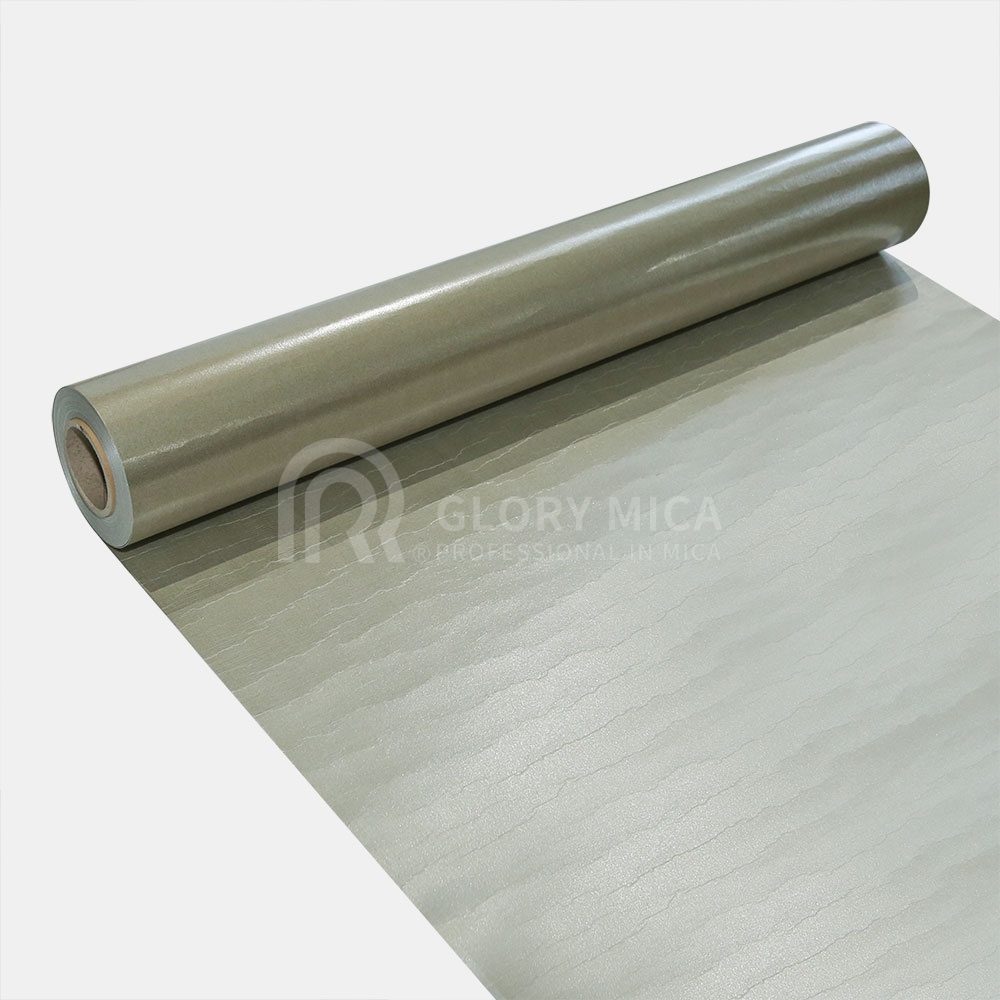
Why thickness comparisons go wrong: three common specification errors
The first error is treating thickness as a temperature rating. In this product family the thermal ceiling is set by the mica paper type and the silicone resin and glass construction, not by the calliper. Every thickness in the R-5461 family is listed with the same maximum temperature of up to 1000°C, so buying the 0.5 mm roll to gain heat resistance buys nothing that the 0.2 mm roll does not already have.
The second error is treating nominal thickness as delivered thickness. Each thickness carries its own tolerance: 0.2 mm is specified as 0.2±0.02 mm, 0.3 mm as 0.3±0.03 mm, 0.4 mm as 0.4±0.03 mm and 0.5 mm as 0.5±0.04 mm. That band matters whenever the roll is die-cut, laminated, stacked or inserted into a gap, because stack height is the sum of individual tolerances rather than the sum of nominal figures.
The third error is over-specifying. Choosing 0.5 mm for a low-voltage appliance wrap adds 0.3 mm of stack height, extra mass and extra stiffness, but the electrical floor only needs to clear the working voltage. The opposite mistake is equally common: specifying 0.2 mm for a barrier that has to hold a higher voltage, and discovering the gap at type testing rather than at the drawing stage.
Why mica roll thickness is being specified more tightly than before
Mica roll is a flexible insulation format built from mica paper impregnated with a special silicone resin on glass cloth. The listed application base is broad and has become more demanding in three areas at once.
- Fire-resistant cable. Mica roll is used as a temperature-resistant insulating material in power lines and home decoration cables, where the mica layer is expected to remain an electrical barrier while the polymer around it degrades.
- Household appliances. Electric irons, hair dryers, toasters, electric kettles, cooking utensils and microwave ovens use mica insulation close to the heat source, in spaces that are already tight.
- New energy vehicle battery modules. Mica roll appears as fireproof material in battery power modules and as gaskets and separators. China's GB 38031-2025, effective from 1 July 2026, sets a 120-minute thermal runaway protection requirement for traction batteries, which pushes pack designers to document the barrier rather than assume it.
Phlogopite mica is generally reported in the 800–1000°C range, and the R-5461 rolls are listed to withstand a maximum temperature of up to 1000°C. Once the thermal question is settled by material choice, thickness becomes the variable that controls voltage margin, fit and handling — which is exactly why it now gets written as a specification instead of a habit.
What actually changes between 0.2 mm and 0.5 mm
R-5461 mica roll consists of phlogopite mica paper impregnated with a special silicone resin on glass cloth. Depending on application, synthetic mica paper or calcined mica paper can be used instead of phlogopite paper. The four-thickness ladder is published consistently across the roll models, including R-5461-PG (glass backed phlogopite), R-5461-GPG (glass on both sides), R-5461-PGP (glass inside), R-5461-SG (glass backed synthetic), R-5461-GSG and R-5461-SGS.
0.2 mm: the thinnest roll, lowest mass, more than 2 kV
At 0.2 mm the tolerance is ±0.02 mm, mica content is 350±10 g/m² and breakdown voltage is greater than 2 kV. This is the lightest build in the family and the one that fits where stack height is the binding constraint.
0.3 mm: the middle step, more than 3 kV
At 0.3 mm the tolerance is ±0.03 mm, mica content is 500±20 g/m² and breakdown voltage is greater than 3 kV. It adds roughly 150 g/m² of mica over the 0.2 mm build while staying within a thin-profile construction.
0.4 mm: more than 4 kV with the same ±0.03 mm band
At 0.4 mm the tolerance remains ±0.03 mm, mica content is 600±20 g/m² and breakdown voltage is greater than 4 kV. The tolerance band does not widen between 0.3 mm and 0.4 mm, so moving up one step adds dielectric capability without loosening the dimensional control a converting line has to work with.
0.5 mm: the highest dielectric floor in the family, at least 5 kV
At 0.5 mm the tolerance is ±0.04 mm, mica content is 730±20 g/m² and breakdown voltage is at least 5 kV. Mica content roughly doubles between the thinnest and the thickest roll, and this is the thickness to reach for when the barrier has to hold the largest voltage in the family or absorb handling and assembly damage.
Read the voltage figures as floors, not typicals. The specification is written as greater than 2 kV, greater than 3 kV, greater than 4 kV and at least 5 kV. For a design calculation, treat each number as a guaranteed lower bound and apply the margin required by your own end-product standard and approval route.
A five-step selection sequence
- Fix the peak working voltage, not the nominal voltage. Selection is driven by the highest voltage the barrier must hold, including transient conditions defined by the end-product standard, rather than by the steady-state nameplate figure.
- Match the voltage to the breakdown floor. Use greater than 2 kV for 0.2 mm, greater than 3 kV for 0.3 mm, greater than 4 kV for 0.4 mm and at least 5 kV for 0.5 mm, then confirm that your required margin still fits inside the chosen floor.
- Check the space budget with the tolerance included. Calculate stack height using ±0.02 mm at 0.2 mm, ±0.03 mm at 0.3 mm and 0.4 mm, and ±0.04 mm at 0.5 mm. Stacking or laminating several layers multiplies that band.
- Confirm the thermal class has not changed. Because all four thicknesses are rated to the same maximum of up to 1000°C, the heat decision belongs to mica paper type — phlogopite, synthetic or calcined — not to thickness.
- Lock the roll format to the conversion equipment. Listed roll lengths are 20 m, 25 m, 40 m, 50 m and 100 m. Where a wide web is needed, Glory Mica has produced mica roll and mica tape at widths above 1320 mm against a normal 1000 mm width, so width should be raised at the enquiry stage rather than assumed.
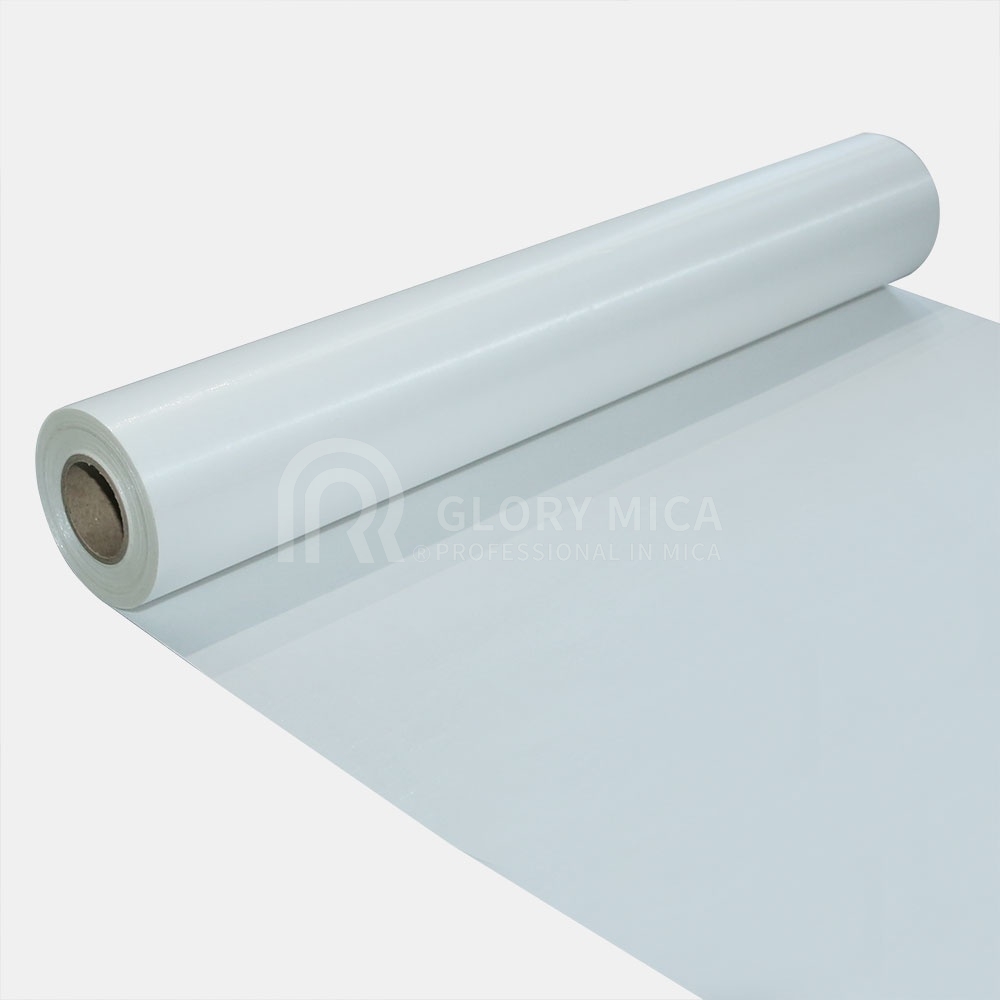
Where each thickness fits in practice
Fire-resistant cable builds: 0.2 mm to 0.3 mm
Cable constructions are wound and formed, so mass and flexibility matter as much as dielectric strength. The 0.2 mm roll at 350±10 g/m² and greater than 2 kV, or the 0.3 mm roll at 500±20 g/m² and greater than 3 kV, keep the barrier thin while staying inside the same 1000°C thermal rating.
Household appliances: 0.2 mm to 0.4 mm
Irons, hair dryers, toasters, kettles, cooking utensils and microwave ovens combine tight internal space with a heat source. Because the thermal ceiling is identical across the range, the choice is settled by available gap and by the voltage the insulation must hold, which typically lands between the 0.2 mm and 0.4 mm builds.
Battery modules, gaskets and separators: 0.4 mm to 0.5 mm
Where mica roll is used as fireproof material in battery power modules, or as a gasket or separator, the part is often handled, compressed and assembled. The 0.4 mm build at greater than 4 kV and the 0.5 mm build at at least 5 kV provide the higher dielectric floor and more physical substance for those operations.
Industrial barriers and heavier handling: 0.5 mm
When a barrier has to survive repeated handling, cutting and insertion, or when the working voltage sits near the top of what a single roll can hold, the 0.5 mm roll is the appropriate end of the range — at the cost of 0.04 mm tolerance and the highest mica content in the family.
Side-by-side comparison of the four R-5461 roll thicknesses
| Property | 0.2 mm | 0.3 mm | 0.4 mm | 0.5 mm |
|---|---|---|---|---|
| Thickness tolerance | ±0.02 mm | ±0.03 mm | ±0.03 mm | ±0.04 mm |
| Mica content | 350±10 g/m² | 500±20 g/m² | 600±20 g/m² | 730±20 g/m² |
| Breakdown voltage | greater than 2 kV | greater than 3 kV | greater than 4 kV | at least 5 kV |
| Maximum service temperature | up to 1000°C | up to 1000°C | up to 1000°C | up to 1000°C |
| Roll lengths (listed options) | 20 m, 25 m, 40 m, 50 m, 100 m | |||
| What the step actually buys | Thinnest barrier, lowest mass | Thin profile with a higher voltage floor | Higher voltage floor at the same ±0.03 mm band | Highest dielectric floor and more substance for handling |
The table applies to the R-5461 roll family. The ceramic-backed COMBI variants (R-5461-COMBI G and R-5461-COMBI GC) are a different construction, listed at 2.1±0.04 mm, 2.3±0.1 mm, 2.4±0.1 mm and 2.5±0.1 mm with a 2 mm ceramic layer and breakdown voltages from greater than 4 kV to at least 6 kV. They should not be substituted into a 0.2–0.5 mm comparison.
Frequently asked questions
Which Glory Mica products carry IEC 60331 fire grades, and how is the roll itself verified?
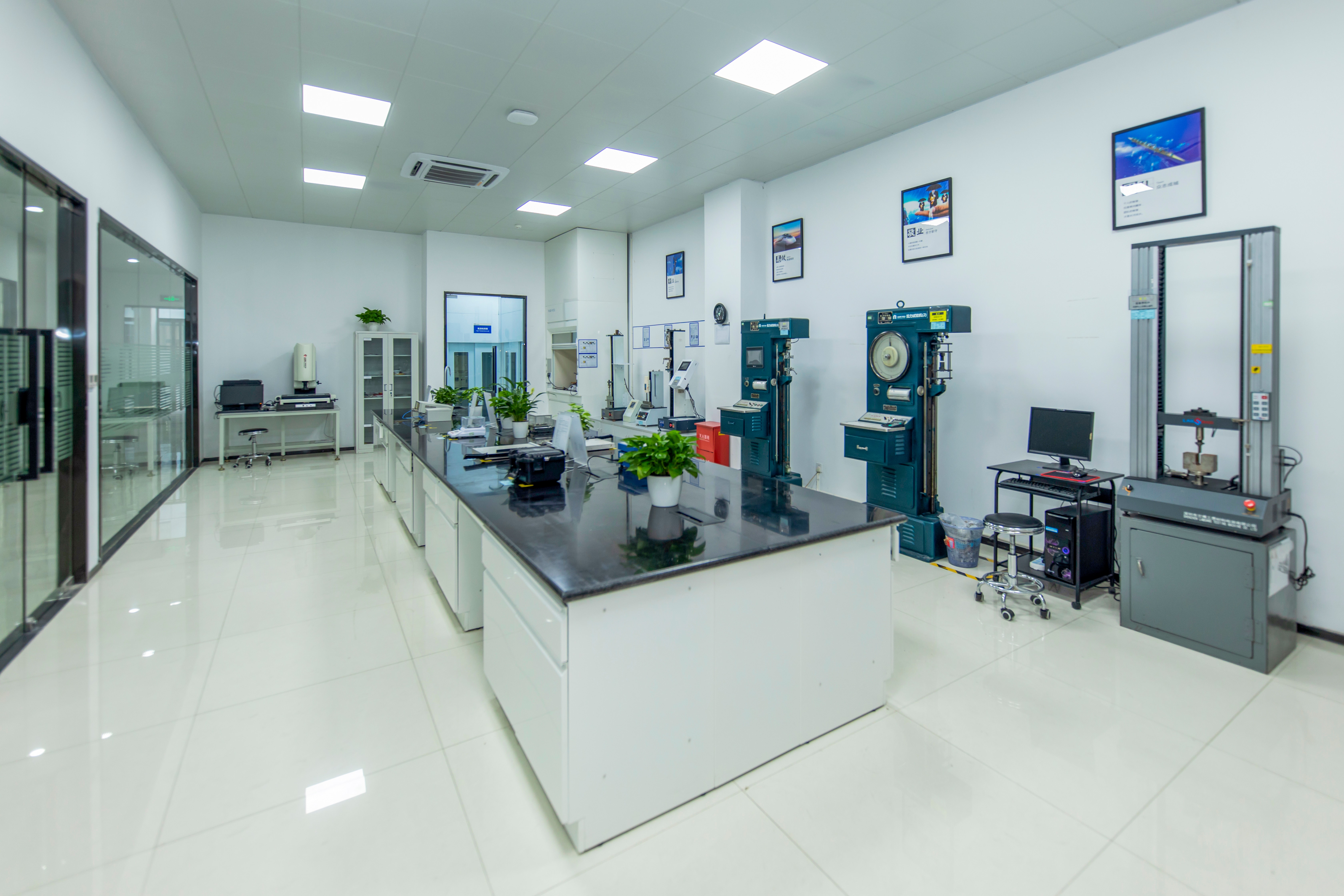
IEC 60331 fire grades are listed on the tape lines: the R-5461-P phlogopite mica tape series is listed with fire grades of 750°C to 850°C and IEC 60331; calcined mica tape R-5461-CM-GS is listed with BS 6387 at 850°C to 900°C and IEC 60331; synthetic mica tape R-5461-S-GS is listed with BS 6387 at 950°C to 1000°C and IEC 60331. The mica roll data in this article is a product specification, not a fire test grade, so where the roll is used as a fire barrier, request the product-specific test report. Manufacturing is covered by ISO 9001 certificate 03125Q20088R5M, ISO 14001 certificate 03124E20096R5M, ISO 45001 certificate 03125S1068R2M, ISO 50001 certificate 03126En00019R100 and IATF 16949 certificate T-11367/0.
How much extra electrical margin does each thickness step add?
Breakdown voltage is listed as greater than 2 kV at 0.2 mm, greater than 3 kV at 0.3 mm, greater than 4 kV at 0.4 mm and at least 5 kV at 0.5 mm. Each 0.1 mm step raises the floor by roughly 1 kV in this family, while mica content rises from 350±10 g/m² to 730±20 g/m² across the same range.
Is 0.5 mm always the safer specification?
No. All four thicknesses are rated to the same maximum service temperature of up to 1000°C, so a thicker roll buys dielectric margin and physical substance, not a higher thermal class. If the working voltage sits comfortably inside the greater-than-2 kV envelope of the 0.2 mm roll, moving to 0.5 mm adds 0.3 mm of stack height and extra mass without a heat benefit. Thicker is the right answer when the barrier must hold a higher voltage or survive handling, not when it only has to survive temperature.
Can buyers check tolerance and mica content before a mass order?
Yes. Dimensional tolerance is ±0.02 mm at 0.2 mm, ±0.03 mm at 0.3 mm and 0.4 mm, and ±0.04 mm at 0.5 mm, and mica content is specified per square metre for each thickness, so both can be measured on a sample roll. Glory Mica quotes a minimum order quantity of 1 unit and states 100% testing, which allows a sample to be judged against the same criteria as production.
What lead time and capacity apply to a mica roll order?
Glory Mica states a lead time of 7 to 30 days and a monthly mica capacity of 8,000 tons, with global export and 100% testing. Listed roll lengths are 20 m, 25 m, 40 m, 50 m and 100 m. To move from comparison to a quotation, send the thickness, roll length, mica paper type and required test documentation to info@glorymica.com or +86-573-83679942, or download the company brochure at https://cdn.socialarks.com/sbsp/25321/common/2026/0921/Glorymica%20Company%20.pdf.
Conclusion: pick the thinnest roll that still clears your voltage
The four R-5461 thicknesses are not a ladder of increasing heat resistance. They are a ladder of increasing dielectric margin, built on the same up-to-1000°C thermal rating, the same roll lengths of 20 m to 100 m and the same phlogopite, synthetic or calcined mica paper construction. Thickness decides how much mica sits between the live part and the environment: 350±10 g/m² and greater than 2 kV at 0.2 mm, rising step by step to 730±20 g/m² and at least 5 kV at 0.5 mm.
That gives a clean decision rule. Start from the peak working voltage, choose the thinnest roll whose breakdown floor covers it with the margin your standard requires, then use the tolerance band to confirm the part still fits. Move up a step only when the voltage or the handling demands it — not on the assumption that a thicker roll runs cooler.
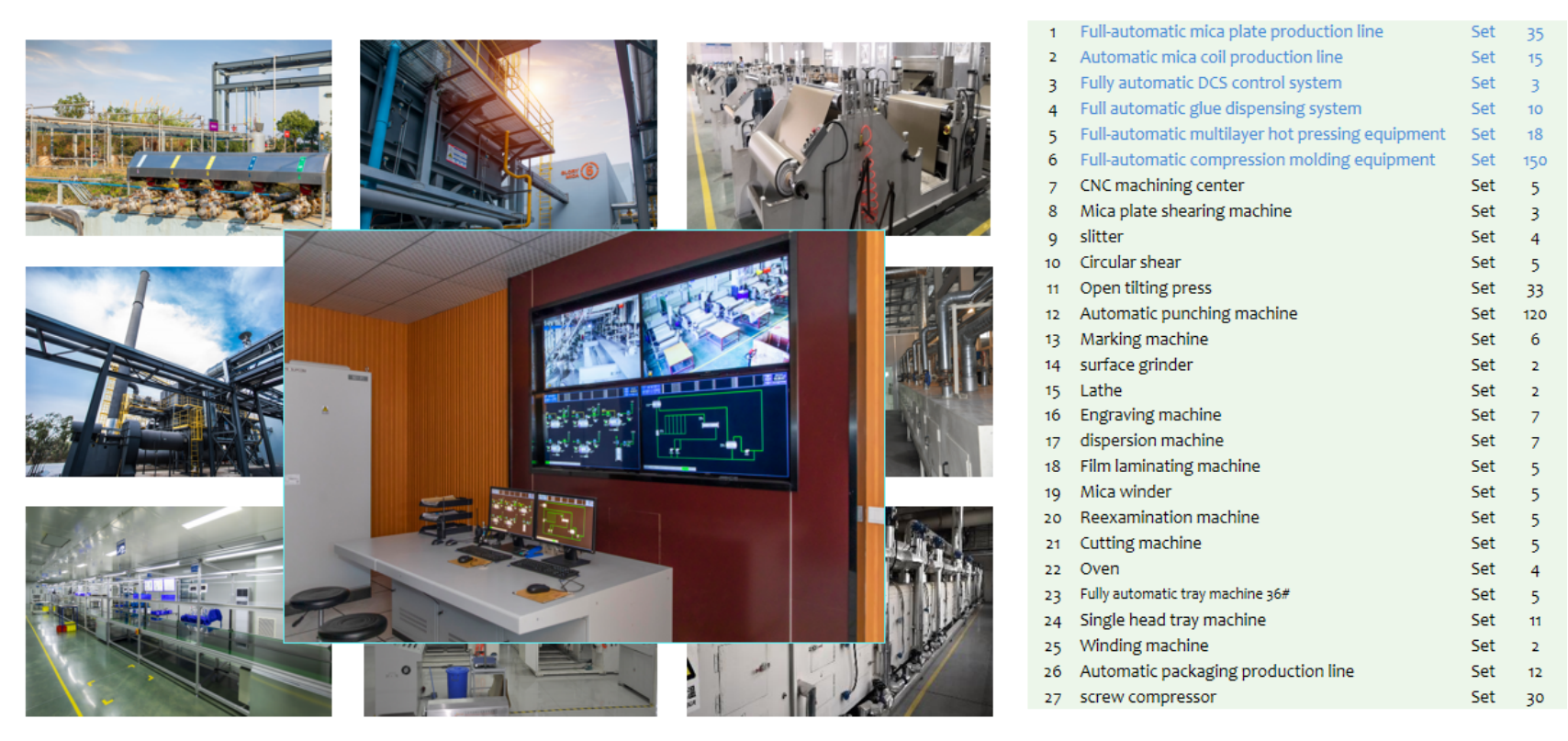
Sample, quotation or thickness recommendation
Glory Mica (Zhejiang Glory Mica Co., Ltd.) manufactures mica roll, mica tape, mica plate, mica sheet, mica tube, mica parts, mica insulator and etched foil mica heaters, with a minimum order quantity of 1 unit and a stated lead time of 7 to 30 days.
Send your thickness, roll length, mica paper type and voltage requirement to info@glorymica.com, call +86-573-83679942 for overseas enquiries, or WhatsApp +86 158-6837-3120. Product information is published at www.glorymica.com.
Company brochure (PDF, public download): Glorymica Company.pdf
Have Questions or Need More Details?
Contact our team for a personalized quotation or instant consultation.
Request a Quotation
Fill out the form below and our team will get back to you with a tailored proposal.
WhatsApp Direct Chat
Prefer to chat in real-time? Message us on WhatsApp for instant assistance & quick answers.
- Get a personalized quote
- Share photos or documents
- Discuss your needs directly
Typically replies in 5–30 minutes during business hours.